Food Safety 101: Tips for Safe Food Handling
Safe food handling is not complicated, but it is unforgiving when people rush it. The good news is that the basic rules are stable, practical, and easy to repeat once they become habit. If you have ever wondered how to keep raw food from contaminating ready-to-eat food, how long leftovers can sit out, or when a thermometer matters more than a guess, this guide gives you the baseline.
Food safety matters because the risks are ordinary. Raw poultry, unwashed produce, dirty hands, and food left in the wrong temperature range can all create a failure mode you do not want in your kitchen. The CDC’s food safety guidance and FoodSafety.gov’s safe minimum internal temperatures chart turn that risk into simple actions: clean, separate, cook, and chill.
In the next few sections, I will lay out the habits that matter most, show the myths that cause the most trouble, and give you a short checklist you can use before serving any meal. The goal is not paranoia. The goal is control.
The four rules that hold the line
The simplest way to think about food safety is to treat it as four linked checks instead of a pile of one-off warnings. The CDC uses the same structure for a reason: it works. Clean, separate, cook, and chill are the habits that stop most preventable mistakes before they grow teeth.
- Clean hands, surfaces, cutting boards, and utensils before and during cooking.
- Separate raw meat, poultry, seafood, and eggs from ready-to-eat foods.
- Cook food to a safe internal temperature with a thermometer instead of trusting appearance alone.
- Chill leftovers and perishable food promptly so bacteria do not get time to multiply.
Those four rules are not decoration. They are the minimum safe setup. If you remember anything else from this article, remember those four.
What cross-contamination really means
Cross-contamination is the transfer of harmful germs from one place to another. In a kitchen, that usually means raw food or dirty surfaces touching food that will not be cooked again. A cutting board used for raw chicken and then for salad vegetables is a classic example. So is a hand that touches raw meat and then a salt shaker, refrigerator handle, or serving spoon.
This is why food safety is not just about the food itself. It is about the path the food takes through the kitchen. The board, knife, counter, cloth, and hands all matter. In practice, this means that a clean-looking kitchen can still be unsafe if the workflow is sloppy.
Common sources of contamination
- Juice from raw meat or poultry on cutting boards, plates, or counters.
- Hands that move between raw food and ready-to-eat food without washing.
- Shared utensils that touch both uncooked and cooked food.
- Sinks, sponges, and towels that stay damp and spread germs instead of removing them.
- Produce that is not rinsed before cutting or serving.
If that sounds like a long list, keep the response short: use separate tools, wash often, and do not trust surface cleanliness alone.
The habits that matter every day
1. Wash hands the right way
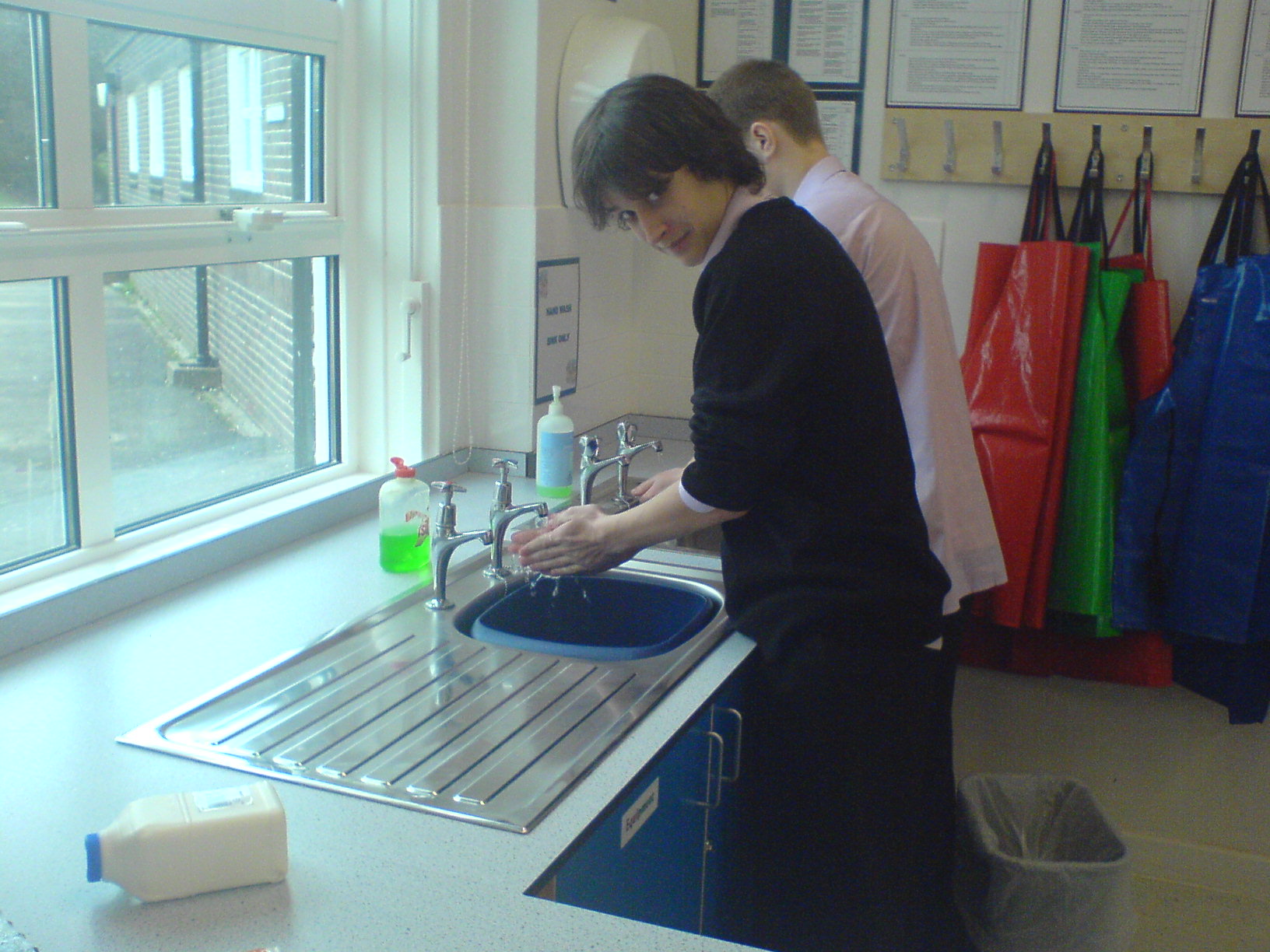
Handwashing sounds basic because it is basic, and that is precisely why it gets skipped. Wash with soap and running water for at least 20 seconds before cooking, after handling raw meat or eggs, after touching garbage, after using the bathroom, and whenever your hands may have picked up something you would not want on food. The point is not to sanitize the planet. The point is to stop moving contamination around your kitchen.
A quick rinse is not enough. Soap loosens grime and germs; rubbing does the actual work. If you handle food for a family, a group, or a shared kitchen, this one habit does more for risk reduction than most people admit.
2. Keep raw and ready-to-eat foods apart
Raw food should not share a surface with food that is about to be served. Use separate cutting boards if you can. If you only have one board, clean and sanitize it before moving from raw to ready-to-eat food. Put raw meat in sealed containers on the lower shelf of the refrigerator so drips do not fall onto produce or leftovers.
When in doubt, assume contamination is invisible. If raw chicken touched the board, the board is not safe for salad until you have cleaned it properly. If a spoon touched uncooked batter and then touched the finished dish, the spoon is no longer innocent.
3. Use a thermometer when cooking matters
Appearance can lie. Chicken can look done and still be undercooked. Burgers can brown before the center is safe. Fish can look opaque while still needing more heat. A food thermometer removes the guesswork, and in food safety that is the whole point.
FoodSafety.gov’s temperature chart is the clean reference point I use when I need a number rather than a memory trick. Safe internal temperatures are not a philosophical debate. They are the line between “probably fine” and “definitely fine enough to serve.”
4. Chill food before it lingers
Perishable food should not spend long stretches in the temperature danger zone. Once food is cooked or opened, it should move into the refrigerator or freezer without delay. Large pots of soup, rice, sauces, and stews should be portioned into smaller containers so they cool faster. A big hot container in the fridge is a slow one. Slow is the enemy here.
The rule is simple: do not leave food out just because the kitchen is busy. Serve, store, and move on. That is the rhythm that keeps the line held.
5. Clean as you go, but clean for real
“Clean as you go” only helps if the cleaning is complete. Wiping a counter with a damp cloth is not the same as washing a cutting board with hot soapy water and, when needed, using a proper sanitizing step. Sponges can also become a problem if they stay damp and dirty. Replace or disinfect them regularly, and do not let them become the quiet middleman in your kitchen.
This is where a small amount of discipline pays off. A few extra seconds on the board save a much larger problem later.
A quick temperature table
There are plenty of food safety details, but a small temperature map covers the situations most home cooks face. If you keep one reference nearby, make it this one.
| Food | Safe internal temperature | What it means in practice |
|---|---|---|
| Poultry | 165°F / 74°C | Chicken and turkey need a thermometer check in the thickest part. |
| Ground meats | 160°F / 71°C | Ground beef, pork, and mixed meats need full center heat, not guesswork. |
| Fish and shellfish | 145°F / 63°C | Fish should flake and reach the safe point through the thickest area. |
| Leftovers and casseroles | 165°F / 74°C | Reheat until the food is steaming and evenly hot. |
| Egg dishes | 160°F / 71°C | Custards, quiches, and egg-heavy dishes should be fully set and hot. |
If a dish does not fit neatly into a rule-of-thumb category, the thermometer still wins. The tool is boring. That is its virtue.
Food handling from store to fridge
Food safety does not begin at the stove. It starts when you shop, unpack, and store groceries. Keep raw meat separate in the cart and in the car. Put cold foods away quickly when you get home. Do not let groceries sit in the trunk while you answer messages or unpack everything else first.
In the refrigerator, use simple order. Ready-to-eat food should not share space with raw food drips. Label leftovers with dates if the container will sit for more than a day or two. That habit is not fussy. It is a cheap form of control.
The USDA’s safe handling advice and FoodSafety.gov’s storage guidance both make the same point in different language: good food safety is mostly a matter of separation, speed, and consistency.
A small storage checklist
- Check that the refrigerator is cold enough.
- Store raw meat on the lowest shelf in sealed packaging.
- Keep produce rinsed and dried before storing when appropriate.
- Use leftovers promptly and keep the oldest items in front.
- Throw away food that looks, smells, or feels unsafe instead of trying to bargain with it.
Don’t forget produce and thawing
Produce is easy to underestimate because it looks harmless. But unwashed fruit and vegetables can carry dirt and germs from the field, transport, or kitchen surfaces. Rinse produce under running water before cutting or serving it, and use a clean brush for firm items such as melons or potatoes if needed. Soap is not necessary on food, and it can leave behind more problems than it solves.
Thawing deserves the same attention. The safest options are the refrigerator, cold water changed regularly, or the microwave if the food will be cooked immediately afterward. Thawing on the counter is a quiet way to let the outside warm up while the center stays frozen. That is not balance. That is delay.
When food is handled well at this stage, the rest of the meal is easier to control. When it is handled badly, every later step has to work harder to rescue the result.
Build a repeatable routine
Food safety is easier when the same steps happen in the same order. Open the fridge, wash hands, clear the counter, separate raw items, cook, serve, and store leftovers. That sequence sounds almost too simple, but simple is the point. A repeatable order reduces the odds that a busy evening will turn into a sloppy one.
If you cook often, you can turn the routine into a small checklist near the fridge or in your notes app. That does not make the kitchen less human. It makes the kitchen less improvisational, and improvisation is usually where preventable mistakes live.
Common myths that create bad habits
Food safety myths are dangerous because they sound practical. They usually promise certainty, convenience, or tradition. None of those things make food safe by themselves.
Myth 1: If it smells fine, it is fine
This is one of the most stubborn myths in the kitchen. Some harmful germs do not produce obvious smells. Food can look normal and still be unsafe. Smell is useful for spotting spoilage, but it is not a safety test. It is one signal, not a verdict.
Myth 2: Raw chicken should be rinsed before cooking
Rinsing raw chicken does not make it safer. It can splash contamination onto the sink, counter, and nearby tools. The safer move is to handle raw poultry carefully, wash hands after contact, and cook it to the correct internal temperature. That is the line you want to hold.
Myth 3: Leftovers can sit out while everyone finishes eating
A short meal can become a long table conversation, and leftovers can drift on the counter while nobody notices. That is how a small delay turns into an unnecessary risk. Pack leftovers away soon after the meal ends. If the food needs to be cooled, divide it into smaller containers so it drops in temperature faster.
Myth 4: The color of cooked meat tells you enough
Color is unreliable. Ground meat can brown before it is safe, and some cooked foods keep a pink tone even when they are done. A thermometer beats the color test. Every time.
Myth 5: Food safety only matters in restaurants
Home kitchens cause foodborne illness too. In fact, home kitchens often rely on habits instead of process, which makes small mistakes more likely. If you cook for children, older adults, pregnant people, or anyone with a weaker immune system, the margin for error is even smaller.
For a deeper public-health view of why unsafe food handling matters, the FDA’s page on raw milk misconceptions and dangers is a useful example of how a food can sound “natural” and still carry avoidable risk.
A one-minute safety check before you serve
When the kitchen gets busy, I prefer a short checklist over a long lecture. Use this one before a meal goes out the door:
- Are my hands clean?
- Did raw food stay separate from ready-to-eat food?
- Did I use a thermometer for the foods that needed it?
- Did I refrigerate leftovers promptly?
- Did I clean and sanitize the surfaces I touched?
If the answer to any of those questions is no, fix that first. Do not improvise around a missed safety step and hope the meal will forgive you.
For shared kitchens and small food operations
Home cooks can keep this simple, but once a kitchen is shared, the process has to be written down and repeated. A cleaning log, temperature log, and storage routine remove uncertainty from the day. That is where digital tools can help if the operation is larger than one household.
For a team deciding how to turn manual reminders into a working system, a neutral resource such as figure out where AI fits can help map which tasks belong in software and which should stay as simple human checks. In food safety, the basics still come first. The tool is only useful if the rule is already clear.
What to do when something looks off
If food leaves you unsure, do not push it into the “probably fine” category just to avoid waste. The cheaper move is usually the safer one: discard the food, clean the surface, and adjust the process so the same mistake does not repeat. That is not wasteful. That is correction.
When in doubt, ask three questions:
- Was the food kept at a safe temperature?
- Did it stay separate from raw food and dirty surfaces?
- Was it cooked or reheated to the right internal temperature?
If you cannot answer those questions with confidence, the food deserves less trust, not more.
Final thought
Food safety is a discipline, not a mood. The same habits protect a weeknight dinner, a holiday meal, and a busy family kitchen. Wash hands, separate raw food, cook with a thermometer, and chill leftovers without delay. That is the whole structure. Everything else is supporting detail.
If you want more practical reading from this site, start with the home page, browse more posts on the blog, or use the contact page if you want to send a question or suggestion. The line is held by habits, and habits are easier to keep when the steps are clear.