How to Host a Themed Dinner Night: Ideas and Inspiration
How to Host a Themed Dinner Night: Ideas and Inspiration
If you want a dinner party to feel memorable instead of merely organized, the trick is to give the evening one clear idea and let every choice support it. I keep coming back to that simple rule because it cuts through a lot of hosting anxiety.
When people look for themed dinner night ideas, they are usually asking the same few questions: What theme feels fun without becoming complicated? How do I keep the menu cohesive? What should I do about decor, music, and timing? And how do I make sure the whole thing still feels relaxed when guests arrive? As event planner Jove Meyer put it in House Beautiful’s dinner party theme guide, “Lean into your weird idea and make it your own.” That is good advice because the best themed dinners are not about perfection; they are about clarity.
There is also a practical side to the problem that deserves attention. Once food is served buffet-style, passed around the table, or held for a while before guests eat, safety and timing start to matter. The FoodSafety.gov guidance for parties and large groups and the FDA’s safe buffet tips both reinforce the same basic idea: good hosting is not just about style, it is also about keeping the food handled well and the evening comfortable for everyone.
In this article, I will walk through the pieces that matter most: how to define a theme, which themes work especially well at home, how to plan a menu without creating extra work, and how to shape the room so the mood feels intentional. I will also give you a simple hosting timeline you can reuse, because the cleanest dinner party systems are the ones you can repeat without thinking too hard.
If you want the broader site map first, the home page gives the overview, the blog index gathers recent posts, and the About page explains the site’s approach.

Table of Contents
- What a themed dinner night actually is
- Five theme ideas that work at home
- How to plan the menu
- Decor, lighting, and ambiance
- A simple hosting timeline
- Closing thoughts
What a themed dinner night actually is
A themed dinner night is just a dinner with a unifying decision made early. That decision might be a cuisine, a season, a color palette, a film, a travel destination, or even a feeling such as cozy, bright, or playful. The point is not to perform a concept for its own sake. The point is to make the event easier to design. Once the theme is chosen, the menu, table setting, playlist, and even the drinks stop competing with one another.
I like to think of the theme as a thread. If you tug on it, the rest of the evening starts to line up naturally. Without that thread, hosts often build a menu from random good ideas, then wonder why the table feels busy but not memorable. With it, you can make smaller choices with more confidence. A tomato-red napkin may suddenly make sense. A single herb garnish may carry more weight. A simple dessert may feel deliberate instead of plain.
That is why the idea is so useful for home entertaining. A themed dinner night does not require a large budget, a formal dining room, or a professional event planner. It only requires a decision you are willing to repeat across the evening. If the theme says “Italian farmhouse,” then the bread basket, the music, and the candlelight should all quietly agree. If the theme says “movie night,” then the table should look easy and welcoming, not fussy enough to make people nervous.
Useful takeaway: a good theme is specific enough to guide choices, but broad enough that it does not turn the host into a stage manager.
Five theme ideas that work at home
There are endless themed dinner possibilities, but a few patterns work especially well because they are flexible, approachable, and easy to adapt for different budgets. Martha Stewart’s dinner party theme ideas make the same point from a different angle: the strongest themes help you build a coherent menu and a coherent mood at the same time.
1. Seasonal harvest dinner
This is the safest place to start if you want the evening to feel calm and grounded. Build the meal around what is fresh in the season: tomatoes, berries, stone fruit, squash, citrus, herbs, or greens. The decor practically chooses itself. A bowl of fruit, a linen table runner, a few stems in a small vase, and warm light are usually enough.
The advantage here is that the food does the styling for you. Summer might lean toward grilled vegetables, salad, and fruit-forward desserts. Autumn can move toward roasted roots, crusty bread, and something baked. The theme is simple, but it never feels empty.
2. Destination dinner
This is the theme I would pick when I want guests to feel transported without needing a costume budget. Choose a place that can be expressed through food and atmosphere: southern Italy, coastal Greece, a Japanese izakaya, a French bistro, or even a relaxed backyard version of a California wine-country meal. The destination becomes a filter for decisions. Music, tableware, and menu all become easier to choose.
The trick is not to overbuild it. A destination dinner works best when you use a few recognizable signals rather than a museum of props. One pasta shape, one citrus note, one ceramic bowl, and one simple playlist can suggest a place more effectively than a table overloaded with reference objects.
3. Color-focused dinner
This theme looks modern and polished, even when the food is straightforward. Pick a color family and repeat it in the napkins, flowers, drinks, and perhaps one or two menu items. House Beautiful’s theme roundups show how powerful this can be; a color party keeps the menu, decor, and dress code aligned without forcing every course to be elaborate.
You do not need to treat color as a strict rule. If the theme is blue and white, for instance, your menu might include herbed chicken, potatoes, a crisp salad, and berries for dessert. The point is visual harmony, not obedience to a mood board. Think of it as gentle coordination, not choreography.
4. Movie or book night dinner
This theme gives guests something to talk about immediately, which makes the table feel alive. You can build the menu around a film, a series, or a book with a strong setting. A pasta dinner inspired by an Italian film, a seafood spread with a coastal story, or a dessert table shaped around a childhood favorite all work because they give the host a narrative frame.
The category is especially helpful if your guests already know the reference. They will enjoy spotting the details. The dish names, place cards, and playlist can all echo the theme without becoming a joke that only the host understands.
5. Family-style comfort dinner
Not every theme needs to be clever. Sometimes the best dinner night is the one that leans into abundance, warmth, and second helpings. Think roasted chicken, baked pasta, braised beans, garlic bread, salad in a big bowl, and dessert served in slices or spoons at the table. The decor can stay restrained. The mood carries the evening.
This theme is ideal when you want the room to feel casual and generous. It is also one of the easiest to scale up for more guests because most comfort dishes can be made in larger portions without losing their shape. The theme says, very plainly, that people are welcome to linger.
| Theme | Best for | Menu anchor | Decor shortcut |
|---|---|---|---|
| Seasonal harvest | Easy, low-stress hosting | One seasonal main and two fresh sides | Fruit, herbs, linen, candlelight |
| Destination dinner | A transportive atmosphere | A cuisine that signals the place | One or two cultural cues, not a full set |
| Color-focused | Modern visual impact | Dishes that echo the chosen palette | Repeating napkins, flowers, and glassware |
| Movie or book night | Conversation and playfulness | Food inspired by the story world | Small reference details and music |
| Family-style comfort | Large groups and relaxed evenings | One generous main with easy sides | Soft lighting and simple serving pieces |
Practical rule: if a theme cannot be explained in one sentence, it is probably too complicated for a home dinner night.
How to plan the menu without extra drama
Menu planning is where many dinner-party ideas become either a pleasure or a headache. My preference is to build the menu in layers. Start with one anchor dish. Then add one or two supporting dishes that are easy to coordinate. Finish with a dessert that gives the evening a clean ending. That structure keeps the work under control.
The anchor dish should do the heavy lifting. It is the thing that makes the dinner feel themed rather than merely assembled. For a destination dinner, this might be a roast, pasta, curry, or grilled fish depending on the place you are evoking. For a color party, it might be a visibly colored salad, sauce, or dessert. For a comfort dinner, it could be a baked dish that holds well while guests arrive.
The Kitchn’s dinner party planning lesson makes a very practical point: the best plans are the ones that help you think through the cooking, not just the inspiration. That is exactly right. Inspiration is cheap. A realistic shopping list and a sensible prep order are what save the evening.
Here is a simple menu formula I use when I want to keep the night cohesive:
- One anchor main dish
- One starch or bread element
- One vegetable or salad that brings color and balance
- One dessert that can be finished in advance
- One drink that fits the theme or color palette
That formula works because it prevents overdesign. You do not need six courses to create a memorable evening. You need enough variety to keep the table interesting and enough restraint to keep the cook sane. I have seen many dinner ideas collapse under the weight of too many side dishes. The host becomes busy, the kitchen gets crowded, and the theme starts to fray. Simplicity is not a compromise here. It is the method.
Food safety belongs in the menu plan too. If you are serving buffet-style, staging dishes in advance, or leaving food out while guests serve themselves, use the FDA and FoodSafety.gov guidance as a reminder to keep hot foods hot and cold foods cold, avoid cross-contamination, and plan the service window before the food goes out. That is less glamorous than menu naming, but it is the part people remember the next day if it goes wrong.
For a themed dinner, I also like to think about texture and temperature. If the main is rich and warm, the salad should be crisp. If the menu is visually loud, the dessert can be simple. If the theme is bright and citrusy, the drinks can echo that without becoming sugary. These small decisions make the meal feel designed rather than random.
One more rule: do not build the whole menu around a single difficult dish. If one recipe requires your full attention for the entire evening, the theme will start to feel expensive in the wrong way. Guests do not need a performance. They need a host who has enough breathing room to enjoy the conversation.
A sample four-course framework
| Course | Purpose | Example |
|---|---|---|
| Starter | Opens the tone gently | Soup, salad, or small bites |
| Main | Defines the theme | Pasta, roast, or shared platter |
| Side | Adds contrast | Vegetables, bread, or grains |
| Dessert | Ends the story cleanly | Fruit tart, cake, or parfaits |
Useful takeaway: a themed dinner becomes easier when the menu has one visible idea and several quiet supporting parts.
Decor, lighting, and ambiance
The decor does not need to be lavish to be effective. In fact, the most convincing themed dinners usually rely on a few strong choices made consistently. Lighting, cloth, glassware, flowers, and sound matter more than random decoration. When hosts ask me where to start, I usually answer with three things: soften the light, simplify the table, and remove anything that feels accidental.
Lighting is the easiest mood-setting tool you have. A dinner party under bright overhead light tends to feel like a meeting. A dinner party with candles, lamps, or a lower light level feels like an evening. If the room has a harsh ceiling light, switch it off if you can. Use side lighting instead. It costs nothing and changes the atmosphere immediately.
Textiles help too. A cloth napkin, a runner, or even one well-chosen tablecloth can make the meal feel intentional. The exact fabric matters less than the fact that it belongs to the same visual family as the rest of the night. If the theme is rustic, lean into natural fibers. If the theme is modern and color-driven, use clean lines and a tighter palette.
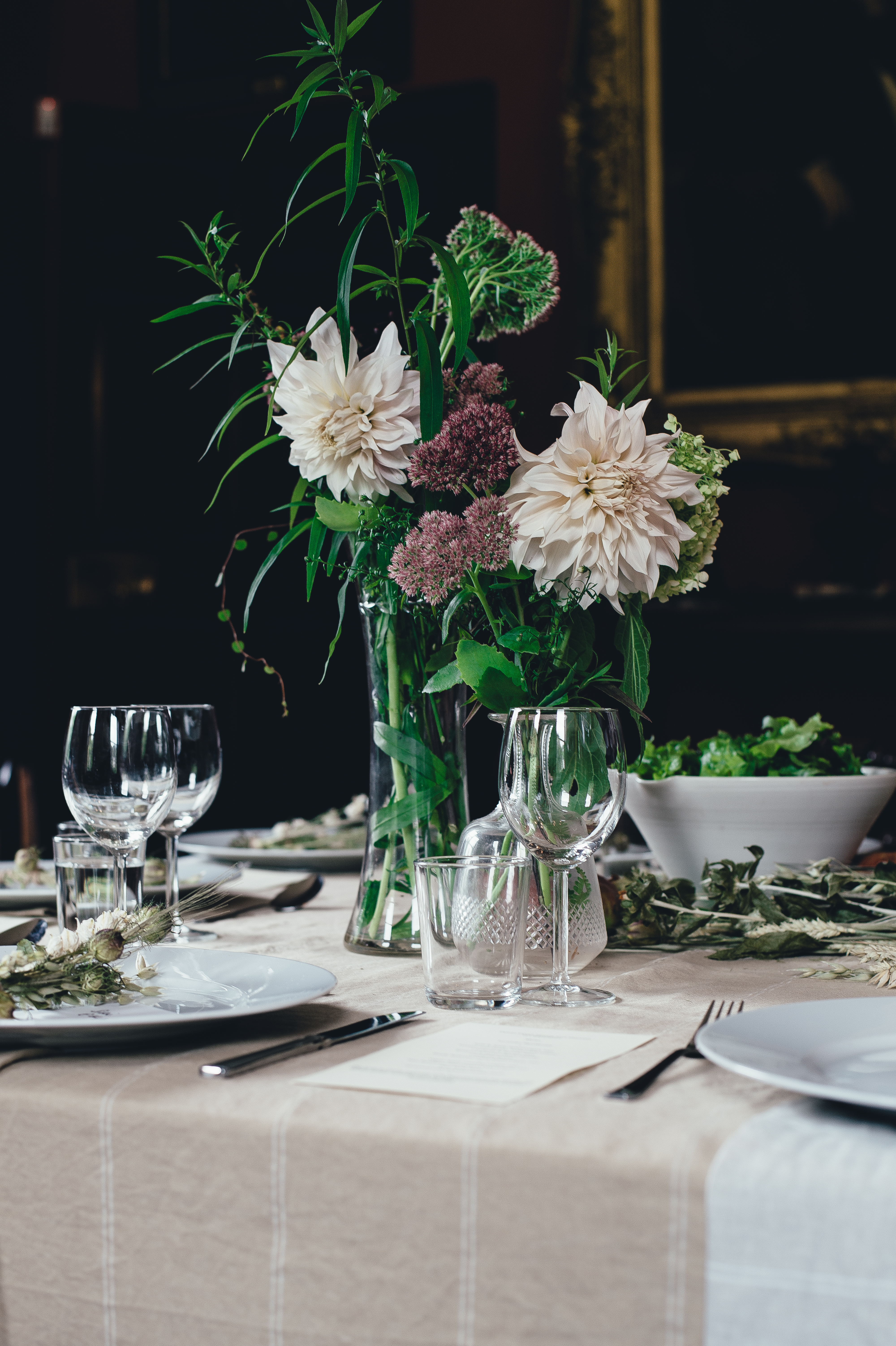
Flowers, branches, fruit, herbs, and candles all work as centerpieces because they do not demand attention from the conversation. That is important. A centerpiece should support the dinner, not win it. I often see hosts stack too many objects down the middle of the table. The result is attractive in a photo and awkward in real life. Keep the middle low enough that people can see one another.
The conversation around ambiance is where the house can quietly do its work. A themed dinner is stronger when the music, entryway, and serving pieces all agree with the chosen idea. A garden-themed dinner can use soft instrumental music, natural textures, and perhaps one or two green notes in the flowers. A movie night can use a playlist that feels playful and light. A destination dinner can borrow a few sounds or rhythms from the place without turning the room into a theme park.
House Beautiful’s guide is helpful here because it shows how table style, floral choices, and theme can reinforce one another instead of competing for attention. The goal is not to display every idea you have. The goal is to make one idea legible.
Here are a few decoration shortcuts that almost always help:
- Use one main color and one accent color.
- Keep centerpieces low and narrow.
- Repeat one material, such as linen, wood, or glass, across the table.
- Choose serving dishes that match the tone of the meal.
- Leave some open space so the table can breathe.
You do not need a large amount of decor to create atmosphere. You need coherence. A single candle repeated five times often looks more elegant than five unrelated decorations. That is true of almost everything in hosting, which is inconvenient for the people who sell extra clutter and excellent for the rest of us.
A simple hosting timeline you can reuse
One reason themed dinner nights feel hard is that hosts try to solve every part of the night at once. I prefer to think in timing blocks. That breaks the work into pieces that can be completed before the room fills up with people and noise.
| When | What to do | Why it matters |
|---|---|---|
| One week before | Choose the theme, guest list, and menu shape | Prevents last-minute drift |
| Three days before | Shop, confirm drinks, and prep anything that stores well | Clears the mental load early |
| One day before | Set the table, plan serving dishes, and make dessert if possible | Protects the day-of schedule |
| Two hours before | Cook the anchor dish, chill drinks, and tidy the entry | Creates calm before guests arrive |
| Thirty minutes before | Light candles, queue music, and set out water | Locks in the atmosphere |
| After guests arrive | Stop optimizing and start hosting | Keeps the evening human |
This kind of timeline sounds almost too simple, but it works because it respects how dinner parties actually unfold. The host should not be scrambling in the kitchen while guests are already settling in. The room should feel prepared before the first plate comes out. If you need one sentence to remember, make it this: do the visible work before the visible moment.
I also like to build in one escape hatch. If the main dish runs late, have a small fallback ready: bread and olive oil, a simple salad, cheese and fruit, or a starter that can be plated quickly. That safety valve lowers stress, which in turn makes the whole night feel more relaxed. Guests rarely remember the exact timing of dinner. They remember whether the host seemed calm enough to enjoy them.
Closing thoughts
Themed dinner nights work because they make hospitality easier to read. They give the host a structure, the guests a cue, and the evening a point of view. That is why a theme can be useful even when the dinner itself is simple. It gives shape to the choices you were going to make anyway.
If you want a practical starting point, choose one of these three paths: a seasonal dinner, a destination dinner, or a color-focused dinner. They are adaptable, they scale well, and they do not require a giant production budget. Once you have that first successful night behind you, you can get more adventurous. Book-inspired dinners, movie nights, and playful color themes become much easier once you know your own rhythm.
If you want more planning ideas, the site’s blog is the right place to keep browsing, and the About page explains the broader approach behind the site. If you are looking for the simplest next step, start with the home page, pick one theme, and build the meal around it. There is no prize for complexity. There is, however, a real reward for an evening that feels thoughtful without feeling strained.
Key points to remember:
- Choose one clear theme and repeat it across the menu, table, and mood.
- Keep the menu compact: one anchor dish, a few supporting dishes, and one simple dessert.
- Use lighting, flowers, and tableware to reinforce the concept, not distract from it.
- Plan food safety and timing early so the host can stay relaxed.
- Start with a theme that feels easy to sustain, then make it more personal next time.
If you host one themed dinner that feels easier than expected, you will probably host another. That is usually how better dinners begin: not with a grand plan, but with one evening that finally feels like it knows what it is doing.