Understanding Food Labels: A Guide for Consumers
If you can read a food label quickly, you can shop with more control and less guesswork. That is the whole game. The package is usually trying to sell you a feeling; the label is where the facts hide.
When I look at a grocery shelf, I ask four questions before I put anything in the cart: How much is a serving? What am I actually getting per serving? What is the ingredient list trying to tell me? Which claims are useful and which are just polished packaging? That is not paranoia. It is a working method. Michael Pollan’s famous line still does a lot of heavy lifting here:
“Eat food. Not too much. Mostly plants.”
That advice is simple. The hard part is turning it into a shopping routine that survives a busy store, a tight budget, and a package covered in marketing language.
The reason this matters is basic: the FDA explains how to use the Nutrition Facts label, and the CDC says label reading helps you track fats, sodium, and added sugars when you choose packaged foods and drinks. The problem is not that the information is missing. The problem is that most shoppers have to decode it in a hurry, and that is where mistakes happen.
In this guide, I will show you how to read a food label without turning grocery shopping into a research project. You will learn what each major section means, how to spot the details that matter most, and how to ignore the marketing noise that wastes time and money.
Quick note: the label is a tool, not a morality test. A food is not automatically “good” because one number looks nice, and it is not automatically “bad” because it carries a number you would rather avoid. The job is to make better decisions, not dramatic ones.
Table of Contents
- What food labels actually tell you
- Key components of a food label
- How to interpret nutrition information
- Common misconceptions
- A practical healthy-shopping routine
- Final takeaways
What food labels actually tell you
A food label has one main job: it gives you a standardized way to compare products. That matters because packaging is designed to persuade you, while the label is designed to disclose. Those are not the same thing. One is a sales pitch. The other is a set of numbers, ingredients, and claims that you can verify.
I treat labels as a small operating system for grocery shopping. If I learn the rules once, I can reuse them every week. That is why the best label-reading habit is not memorizing every detail. It is learning the order in which to check the details.
At minimum, a standard U.S. package label usually helps you answer these questions:
- How big is one serving?
- How many servings are in the package?
- How many calories am I getting?
- Which nutrients am I getting a lot of, and which ones am I getting too much of?
- What ingredients are actually in the food?
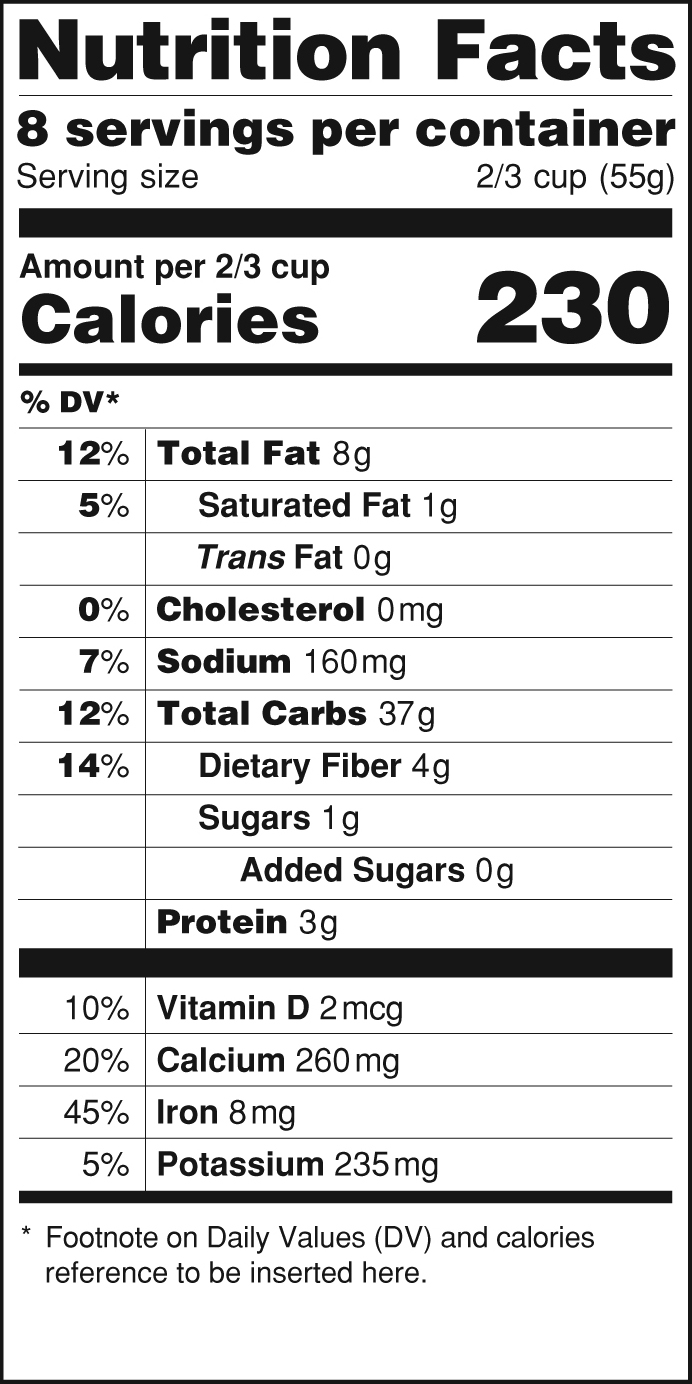
The FDA’s Nutrition Facts label page is useful because it keeps the logic simple: start with the serving size, then move to calories, then check nutrients and ingredients. The CDC’s guidance on nutrition labels and health makes the same point from a public-health angle. When the same advice appears in two official places, that is usually a clue worth respecting.
Key components of a food label
Before you can judge a label, you need to know what each line is for. I keep this section simple on purpose. If the terminology becomes too ornate, the shopper loses.
1. Serving size
This is the first line I check because every other number on the panel is based on it. Serving size is not necessarily the amount you should eat. It is the amount the nutrition numbers refer to. That distinction saves people from the classic mistake of reading a package as if the whole thing were one serving when it is actually two, three, or more.
2. Servings per container
This line tells you how much food is in the package, in label language. A bottle, bag, or box can look like a single meal and still contain multiple servings. That is how someone ends up thinking they bought a 150-calorie snack and then quietly eats 300 or 450 calories without noticing. Labels are polite. Packages are often less so.
3. Calories
Calories are not the whole story, but they are still important. They tell you how much energy the food provides per serving. If you are comparing two similar products, calories can be useful. If you are comparing wildly different products, calories alone will not tell you which one is more nutritious. A lower-calorie cookie is still a cookie.
4. Nutrients to limit
These usually include saturated fat, sodium, and added sugars. In a healthy shopping routine, I look at these early. Why? Because they are the numbers most likely to quietly push an otherwise decent food in the wrong direction. A food can have a respectable calorie count and still be a bad fit if sodium or added sugar is doing too much work.
5. Nutrients to get enough of
Fiber, vitamin D, calcium, iron, and potassium often matter here. The FDA notes that nutrition labels are meant to help consumers make informed choices, and a good choice often means checking for nutrients that support balance rather than just avoiding the obvious villains. Fiber is especially useful because it helps separate foods that merely look healthy from foods that actually function well in a diet.
6. Ingredient list
The ingredient list is where the food stops being a promise and starts being a formula. Ingredients are generally listed by weight, from most to least. That means the top of the list matters. If sugar, refined starches, or salt show up early, the package may be sending a more honest message than the front panel does.
7. Claims and front-of-pack phrases
Words like “natural,” “light,” “healthy,” “made with whole grains,” or “good source of fiber” can be useful, but they are not a substitute for the actual panel. Front-of-pack claims often highlight one positive trait while quietly ignoring everything else. That is marketing doing what marketing does.
Terms worth knowing
| Term | Plain-English meaning | What I check first |
|---|---|---|
| Serving size | The amount all the numbers are based on | Is it realistic for how much I will actually eat? |
| Servings per container | How many label servings are in the package | Will I eat one serving or the whole package? |
| % Daily Value | How much a nutrient contributes to a daily diet | Is this number low enough or high enough for my goal? |
| Added sugars | Sugars added during processing or preparation | Is the food sweet because of ingredients, not just fruit or dairy? |
| Sodium | Salt content, often used for flavor and preservation | Is this a sensible amount for a meal or a daily habit? |
| Ingredient order | Ingredients listed from most to least by weight | What is doing the heavy lifting in this food? |
How to interpret nutrition information
This is the part where people usually overcomplicate things. They do not need a nutrition degree. They need a repeatable method. Mine is a six-step scan.
Step 1: Check the serving size first
Everything else depends on this. If the label says one serving is 1 cup and you are planning to eat 2 cups, then every calorie, gram of sugar, and milligram of sodium needs to be doubled. That is not a trick. It is arithmetic.
Step 2: Look at servings per container
If a package contains multiple servings, I mentally multiply before I buy. This is where convenience foods can become stealthy. A bottle of juice, a bag of chips, or a prepared soup can look modest but still cover more than one serving.
Step 3: Scan calories, but do not stop there
Calories are useful for a first pass. They are not a verdict. Two foods can have the same calorie count and very different nutritional value. One may give you fiber and protein. The other may give you a brief sugar rush and a future snack hunt.
Step 4: Use % Daily Value as a shortcut
The FDA’s rule of thumb is simple: 5% DV or less is low, and 20% DV or more is high. That is not magic; it is a fast reading tool. For nutrients you want less of, like sodium and saturated fat, lower is usually better. For nutrients you want more of, like fiber, higher is usually better.
Here is a practical example. If a frozen entrée has 900 mg of sodium and that is 40% of the Daily Value, it may still fit into a day of eating, but I now know I need to be careful with the rest of the day. If a breakfast cereal gives me 20% or more of the Daily Value for fiber, that is usually a signal worth noticing.
Step 5: Read the ingredient list for the real story
The ingredient list helps answer the question the front panel avoids: what is this food mostly made of? If I see whole grains near the top, I feel better than if I see refined starch, several forms of sugar, and flavorings doing the heavy lifting. The Harvard Nutrition Source food label guide is a helpful companion here because it shows how terminology and ingredient order work together.
Step 6: Check the claims against the panel
This is where I slow down. A label may say “low fat” and still contain plenty of sugar. It may say “whole grain” and still be heavily processed. It may say “made with real fruit” and still be mostly sweetener. I do not reject claims automatically. I just refuse to let them outrank the numbers.
Example 1: The cereal box trap
Imagine a cereal box that advertises whole grains and fiber. Good start. But when I check the Nutrition Facts panel, I discover the serving size is smaller than the bowl I actually use, the sugar is higher than expected, and the fiber is lower than the front panel suggested. That does not make the cereal forbidden. It means I need to compare it with another option before I buy.
Example 2: The “healthy” yogurt problem
A yogurt cup can be high in protein and still bring a lot of added sugar. That is a classic case where the front of the package tells one story and the nutrition panel tells another. If I want a snack that will keep me full, I compare protein, sugar, and ingredient order. If the sugar is doing more work than the dairy, I keep walking.
Example 3: The soup that looks harmless
Prepared soups are a sodium minefield. The package may look light and practical, but one serving can already use up a large share of a day’s sodium budget. The trick is not to ban soup. It is to know whether the soup is supporting your meal or hijacking it.
The CDC’s article on spotting hidden sugars makes a similar point for sweetened foods: the label often reveals more sugar than the packaging mood suggests. That is useful information, not a moral judgment.
Common misconceptions
Most confusion about food labels comes from believing one line on the package can do all the work. It cannot. Here are the mistakes I see most often.
“Low fat” means healthy
Not necessarily. Low fat can be useful, but fat is only one piece of the puzzle. Some low-fat products compensate with sugar, starch, or salt. That may improve taste. It does not necessarily improve the food.
“Natural” means better
That word has marketing value. It does not automatically mean the food is nutritious, minimally processed, or aligned with your goals. If the rest of the label is a disaster, the word “natural” does not rescue it.
“Zero added sugar” means no sugar
Not quite. A product may still contain naturally occurring sugar, and some products can use sweet ingredients that do not appear to consumers as obvious sugar. Read the panel, not the mood lighting.
“Organic” means calorie-free or health-perfect
It does not. Organic is about production standards, not a blanket pass for portion size, sugar, sodium, or saturated fat. An organic cookie is still a cookie.
The ingredient list is too small to matter
Actually, the ingredient list is one of the most useful parts of the label. It tells you what the food is built from, which is often more revealing than the front panel. If the first three ingredients are refined starch, sugar, and oil, the product has already told you a lot.
All claims are lies
That is too simple. Some claims are helpful. Some are incomplete. Some are just strategically framed. The better habit is not cynicism. It is verification. Trust the claim only after the panel confirms it.
The CDC’s food-literacy research page notes that food labels are part of the wider problem of helping people make practical choices under real-world constraints. That is why label reading should be treated as a skill, not a personality trait. Skills can be improved. Marketing departments would prefer you forgot that.
A practical healthy-shopping routine
When I want the label-reading process to stay usable, I keep it to a small routine. This is the part readers can actually take into a store.
- Start with the serving size. Do not let the package talk you into a fantasy portion.
- Compare similar products. If you are buying cereal, compare cereals. If you are buying yogurt, compare yogurts. Context matters.
- Favor higher fiber and more protein when they fit your goal. These often improve satiety and help a meal feel complete.
- Watch sodium in prepared foods. Soups, sauces, frozen meals, and snacks can climb fast.
- Check added sugars in breakfast foods and drinks. This is where many shoppers get ambushed.
- Use the ingredient list to spot the real base of the food. Whole foods should not be hiding under a pile of sugar aliases.
- Ignore the halo effect. One good trait does not cancel three mediocre ones.
Here is the short version I use when I am in a hurry: serving size, calories, sodium, added sugar, fiber, ingredients. That sequence catches most of the costly mistakes without slowing me down.
If you want a broader nutrition pattern to guide those choices, the USDA’s MyPlate overview of food groups is a clean reminder that labels work best when they support a balanced plate, not when they become the only thing you think about. Food labels help you pick a product. MyPlate helps you think about the meal.
That distinction matters. A label can tell you whether a product fits the day. It cannot build the whole day for you. For that, you still need actual meals, actual groceries, and a plan that is less dramatic than your appetite.
A simple comparison table for the store
| If I see this… | I ask this… | What I usually do |
|---|---|---|
| Large package, small serving | Will I eat more than one serving? | Multiply the numbers before I decide |
| Low fat claim | What replaced the fat? | Check sugar and sodium next |
| High fiber claim | Is the sugar still reasonable? | Keep if the balance works |
| “Natural” or “made with” wording | What does the full panel say? | Read the ingredient list before I trust the phrase |
| Prepared meal | How much sodium is hiding in one serving? | Compare against other meals before buying |
If you are the kind of person who likes practical follow-up reading, two of the most useful related posts on this site are How to Meal Prep for the Week: A Beginner’s Guide and Healthy Snack Ideas for Busy Lifestyles. Both are easier to use once you know how to read the label on the package in your hand.
For broader site navigation, you can always return to the Home page, browse the Blog for more practical guides, or visit Services if you need a more structured support path for a larger content or website project.
Final takeaways
I do not think food labels are complicated. I think they are underused. Once you know where to look, they become one of the fastest ways to improve a grocery trip. They help you compare products, avoid accidental overbuying, and spot the difference between real nutrition and polished packaging.
So here is the clean version of the method:
- Start with serving size.
- Check calories, then sodium, added sugars, and saturated fat.
- Use % Daily Value to move fast.
- Read the ingredient list when the front of the package sounds too confident.
- Compare similar products instead of judging one item in isolation.
- Use the label to support your routine, not replace common sense.
That is enough to shop better. Not perfectly. Better is the point.
In short: the label is there to help you decide what belongs in your cart, what should wait for another week, and what is not worth the shelf space. Read it once with discipline, and it starts saving you time every time after that.